Long Sleeves and "Bare Below the Elbows": How to Wear Covered Scrubs on the Ward
Please note: this is general information, not a policy or infection-control advice. Uniform and hand hygiene policies differ between states, health services and wards. Always follow your own workplace's policy and ask your manager or infection prevention team if you're unsure.
If you cover your arms at work, whether for faith, warmth or personal preference, you've probably heard the phrase "bare below the elbows". Here's what it generally means and how long-sleeved scrubs can fit around it.
What does "bare below the elbows" mean?
"Bare below the elbows" (often shortened to BBE) is a practice used in many healthcare settings, including across Australia. During patient care in clinical areas, staff keep their forearms and hands clear of sleeves, watches, bracelets and other jewellery. The aim is to support effective hand hygiene, since clothing and jewellery on the forearms can get in the way of washing hands and wrists properly.
Exactly how BBE applies varies. Some workplaces apply it in all clinical areas, some only during direct patient care, and the details on rings, watches and sleeves can differ.
Can you wear long sleeves?
Often, yes, with care. Many health services allow long sleeves that are pushed up or rolled above the elbow during patient care and hand hygiene, then pulled back down afterwards. Some also offer specific options for staff who cover their arms for religious reasons, such as disposable over-sleeves. What's permitted depends on your workplace, so check your local uniform and hand hygiene policies.
What makes a long sleeve "BBE-friendly"?
- Cuffs that stay up. Ribbed or elasticated cuffs hold above the elbow. Loose sleeves tend to slip down mid-task.
- Not too tight. You should be able to push the sleeve up quickly without wrestling with it.
- Easy to wash. Choose a fabric that handles frequent washing, and follow your workplace's guidance on laundering uniforms.
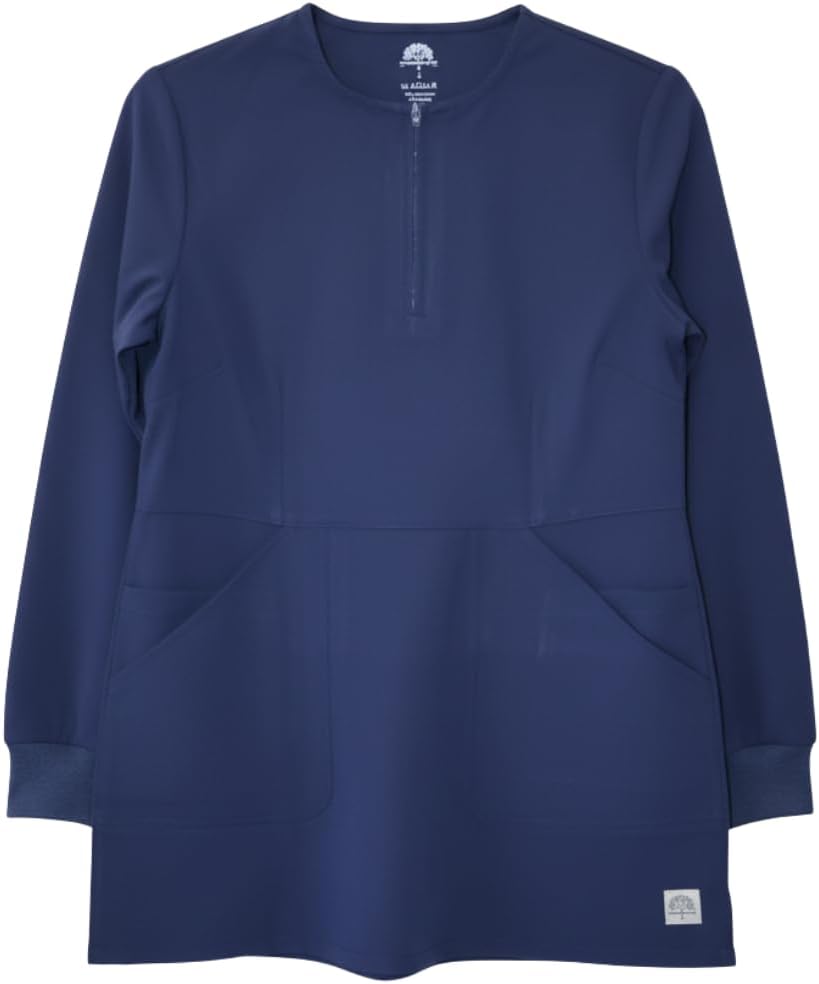
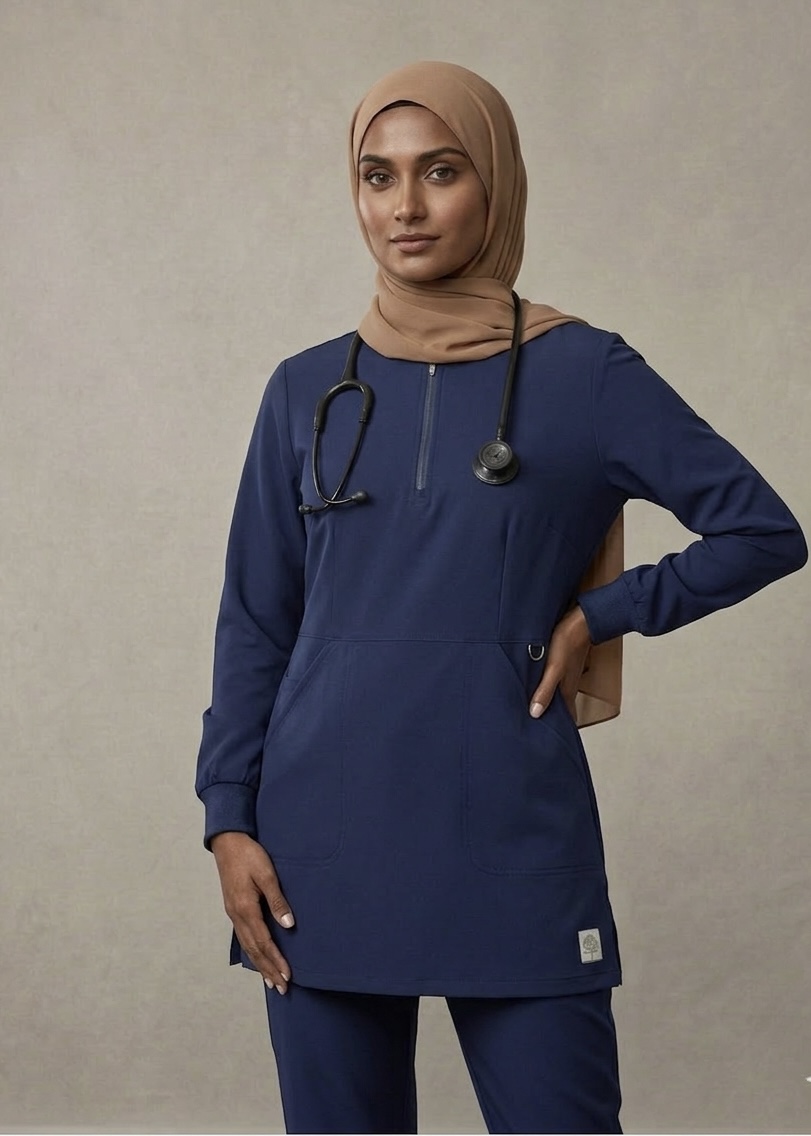
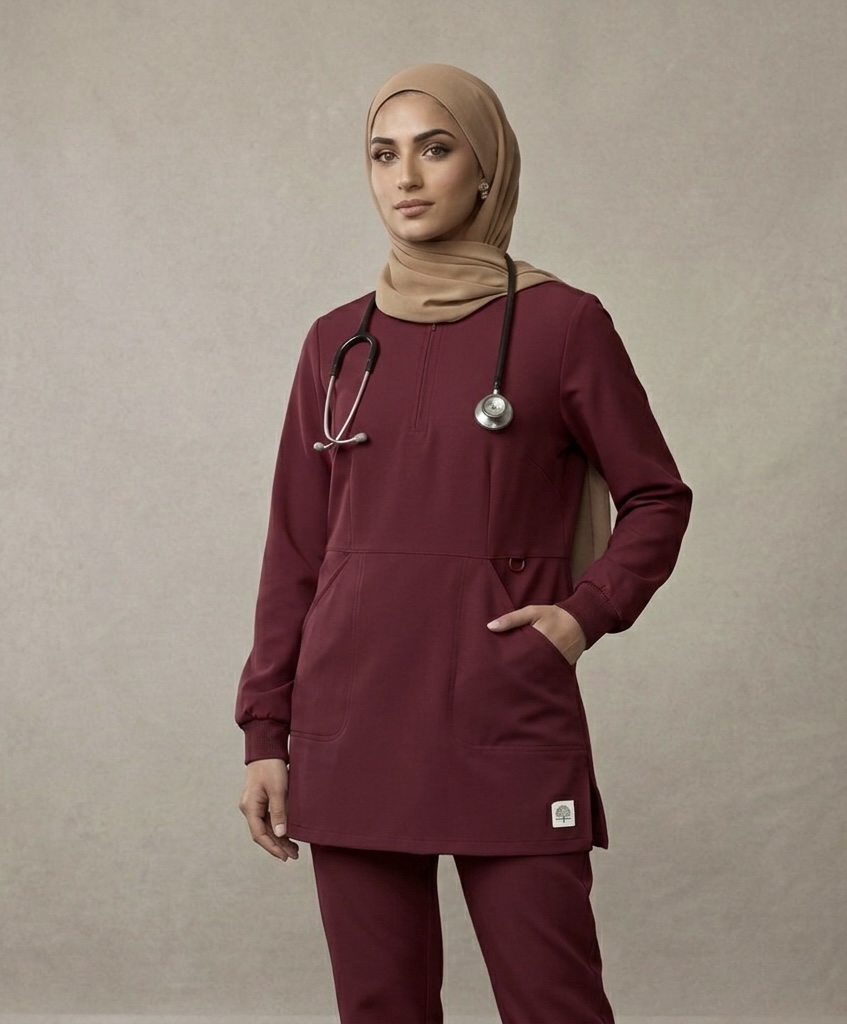
Our Modest Long-Sleeve Top was designed around this. Its ribbed cuffs push up and stay up, then pull straight back down when you've finished.
Tips from the ward
- Push sleeves up before you start patient care, not halfway through.
- Keep a spare top in your locker in case sleeves get soiled.
- If your workplace uses over-sleeves, ask where they're stocked and how to dispose of them.
- Talk to your nurse unit manager or infection prevention team early if you need an accommodation. Most are happy to help you find a workable approach.
The bottom line
Covering your arms and safe hand hygiene can go together. Choose sleeves designed to push up, know your local policy, and ask for support when you need it. Browse our long sleeve scrubs.